Returning “Home”

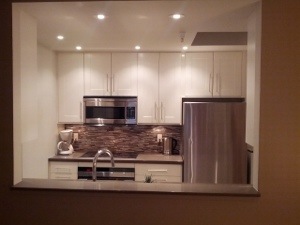
It must seem a bit strange to suddenly have Casa New York come to life. After all it has been 336 days since Penny and I signed off, checked out of our apartment on 21st and returned to Vancouver.  And there is no doubt that it has been a busy time since. We came home to a brand new kitchen and bathroom and we didn’t stop there; we spent five weeks in the desert and four weeks away on the motorcycle. We were blessed with a new granddaughter – the very adorable Hayley – who joined big sister Rachel (equally adorable by the way). Busy and exciting times.

Through all of this however New York was never far away. When you spend enough time there, it gets into your bones. And it got into ours.

I asked Penny what she thought it would feel like to go back. She paused a moment and then responded, “a little like going home.” She was right; we have come home to a place we came to know and love; a place like home.

Our trip back to the Big Apple had a “draw”.  Penny’s cousin who we spend much time with last year was celebrating a significant birthday – today actually – and we thought it would be great fun to surprise her.  It didn’t actually turn out as a surprise, but that doesn’t matter; it was great to see her.  Thursday we rose early, cabbed to the airport and boarded United 1528 to LaGuardia.  We have arrived at LaGuardia several times before but there was a lot more excitement this time.  As we flew up the east coast and up the East River on our approach, the City literally reached up to us.  The new Freedom Tower, the Chrysler building the lights of Times Square were all there.  And the Empire State Building was decked out in her pure white lights.  We almost squeezed out the window.  Then there was the cab ride into the City and the building energy we felt in the air as we came out of the Midtown Tunnel onto 38th Street, turned down Park Avenue and came across 29th Street to 7th Ave and to our new temporary home on 26th.  Just 5 blocks – a short 4 minute walk – from our former Casa New York.

It was like we had come back from a weekend out of the City.  Everything was so familiar.  We walked up 7th Ave and passed the same stores, restaurants.  We immediately fell back into crossing streets against the light.  There was the constant sound of horns honking in the post rush hour traffic.  This is not a touristy area, mostly New Yorkers going about their business.  The tourists are 20 blocks up in Time Square and the Theatre District.  We met Theria at Seven where we were greeted by Niles and Kevin like we were regulars.  Reconnecting was fabulous.  It was almost 2am before we wandered back down 7th Ave to our hotel.  We definitely felt a great connection to this place, something we are now sure we will never lose.

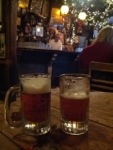
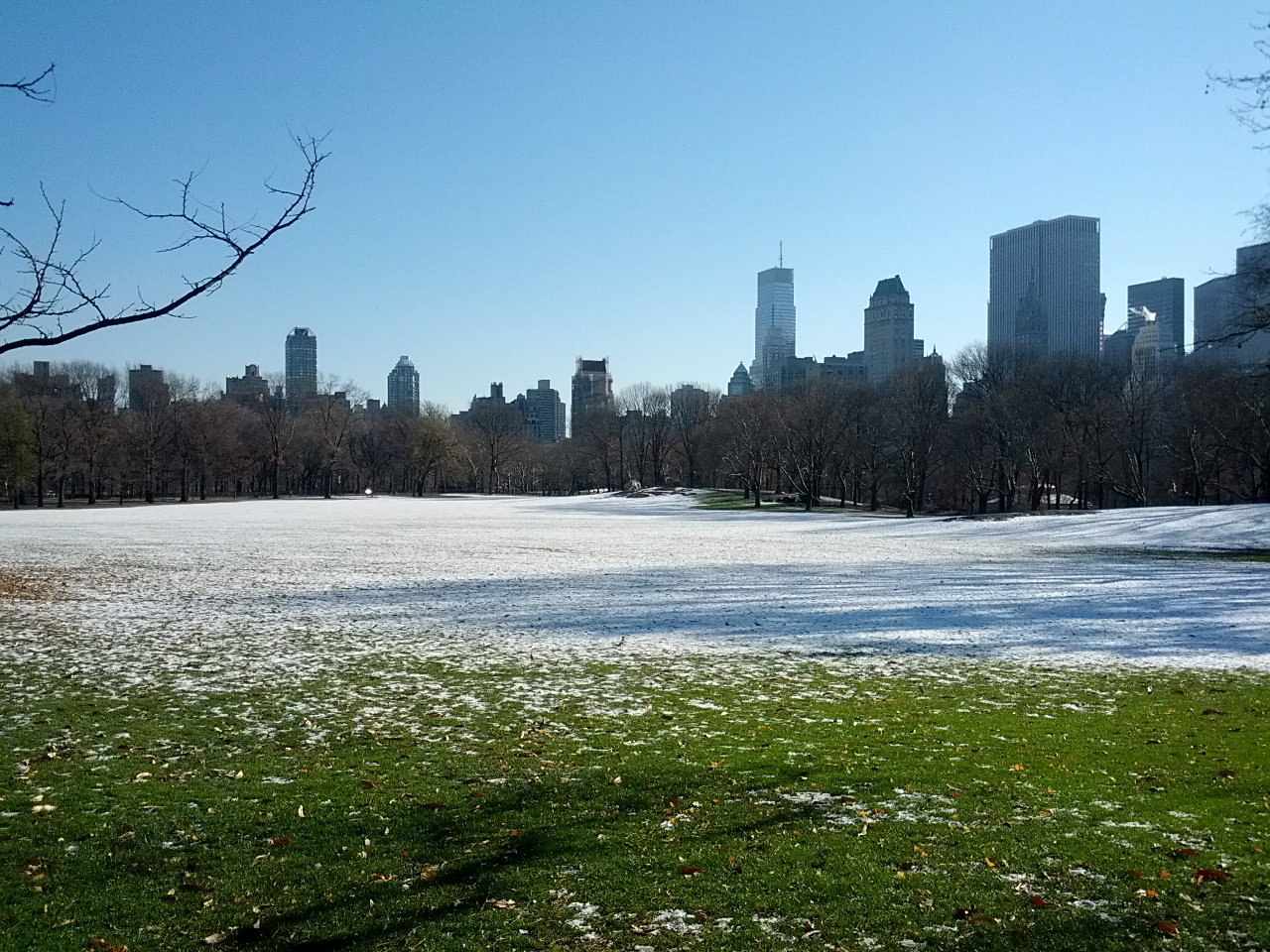
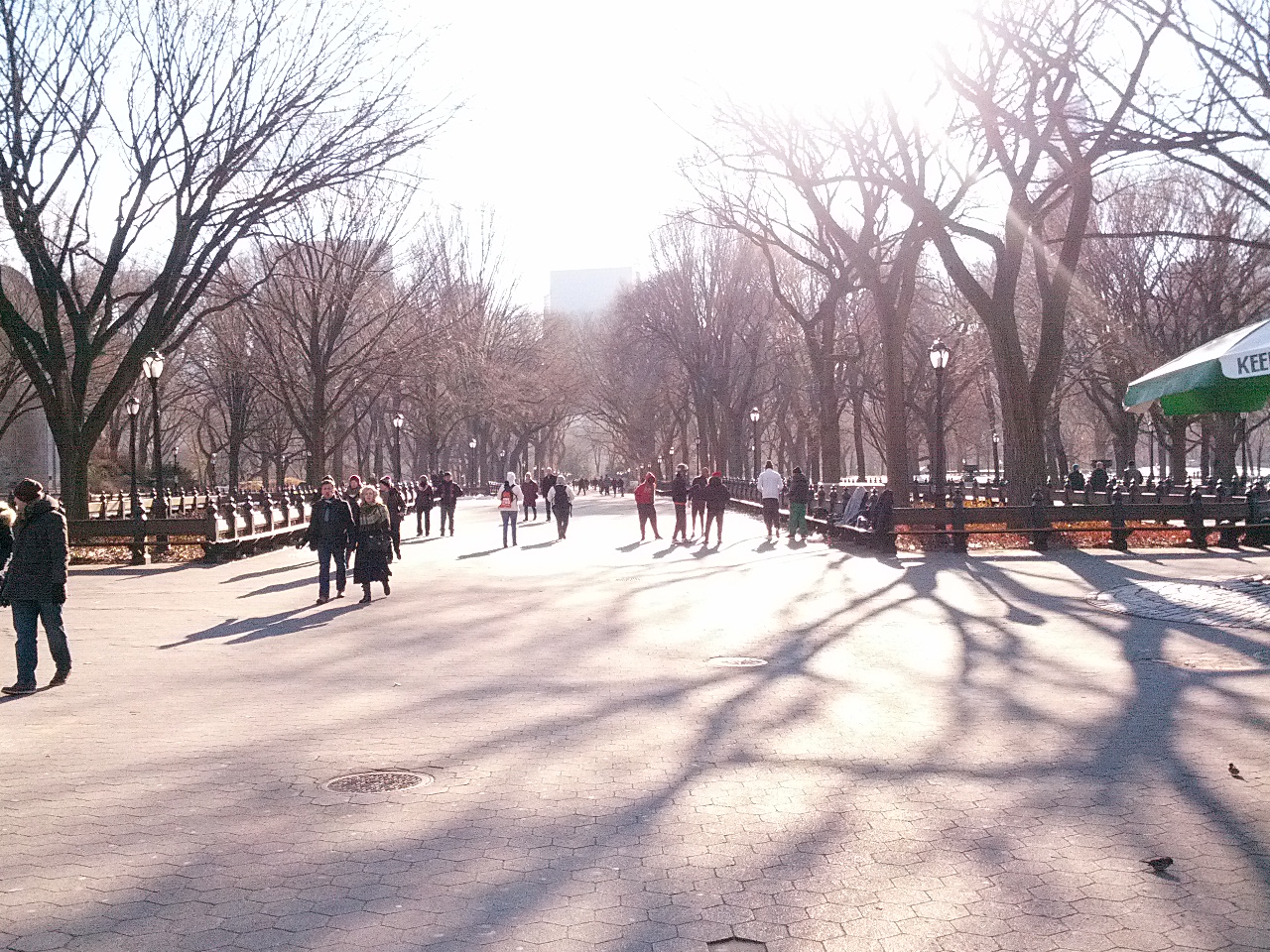
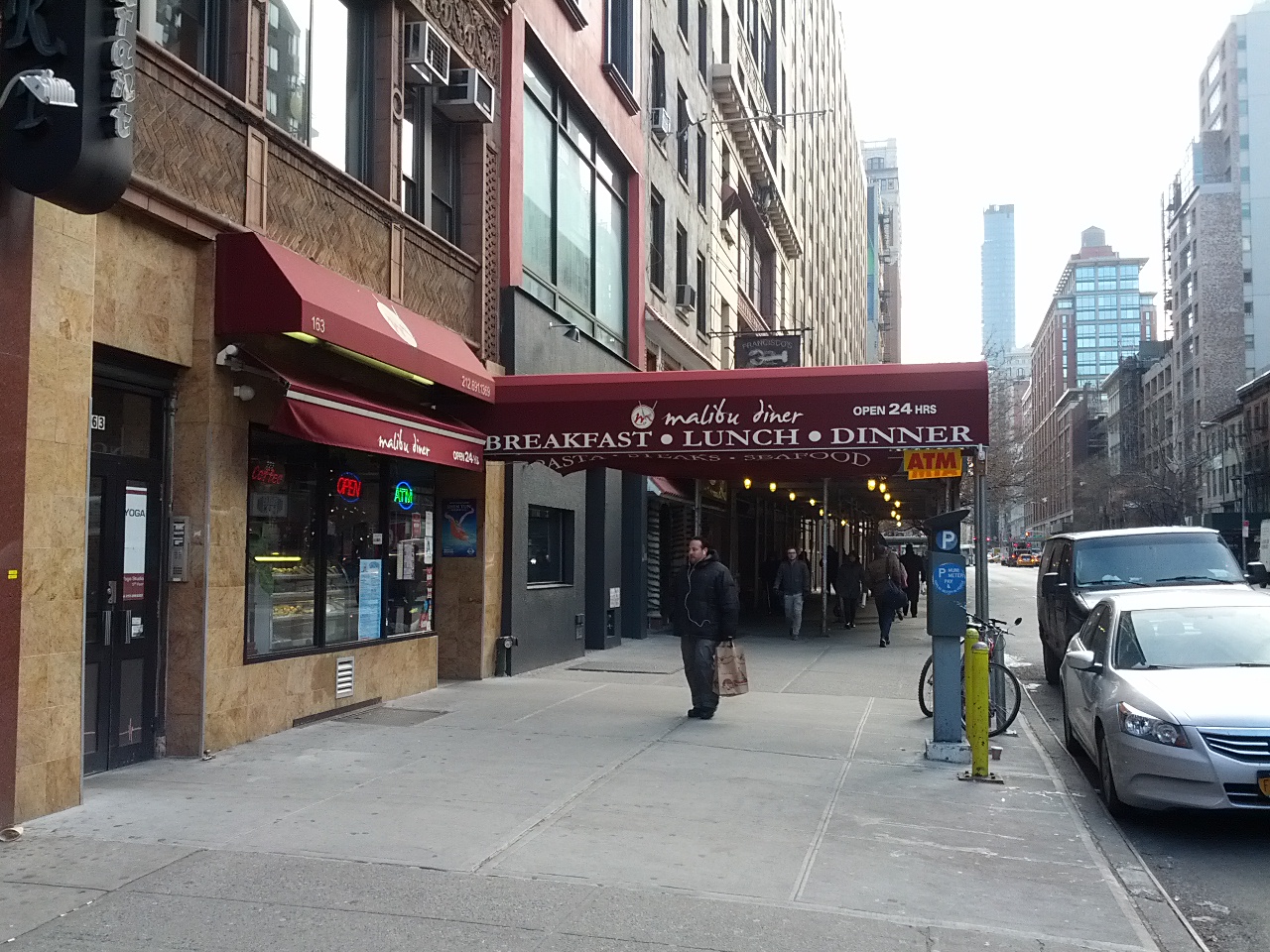
Friday we met Theria at the Malibu Diner on 23rd for breakfast.  This was a another favourite place where you can get a great breakfast and coffee for less than 10 bucks. Image Across the street was the Garden of Eden deli where we did a lot of our shopping.  So familiar. Theria went off to work and we jumped on the #1 subway and headed up to Columbus Circle and Central Park, stopping for a quick look through one of the street markets that spring up in New York in the month leading to Christmas.  The sun was out and the temperature just below freezing but walking into the park was magical.  We have been here many times before but it is always a marvel to walk.  Up past Hechscher playground; around the Sheep Meadow covered with a light dusting of snow;Image up to Strawberry Fields; around The Lake to Bethsada Fountain.  There was a group singing Christmas Carols in below the Minton Mosaics in the Arcade:  we probably heard them last year as well.  Compared to our past visits there were very few people or vendors on the Mall.  But the sun was out burning the starkness of the brown grass and bare trees.  It was interesting to watch wonder in the eyes of those who were obviously here for the first time.Image

Wolman Rink was full of skaters, just like the images we have all seen of a New York winter.  We indulged in the same terrible sausage dog at the outdoor Rink Grill that gave us indigestion last year.  Fortunately we had the Tums with us.Image

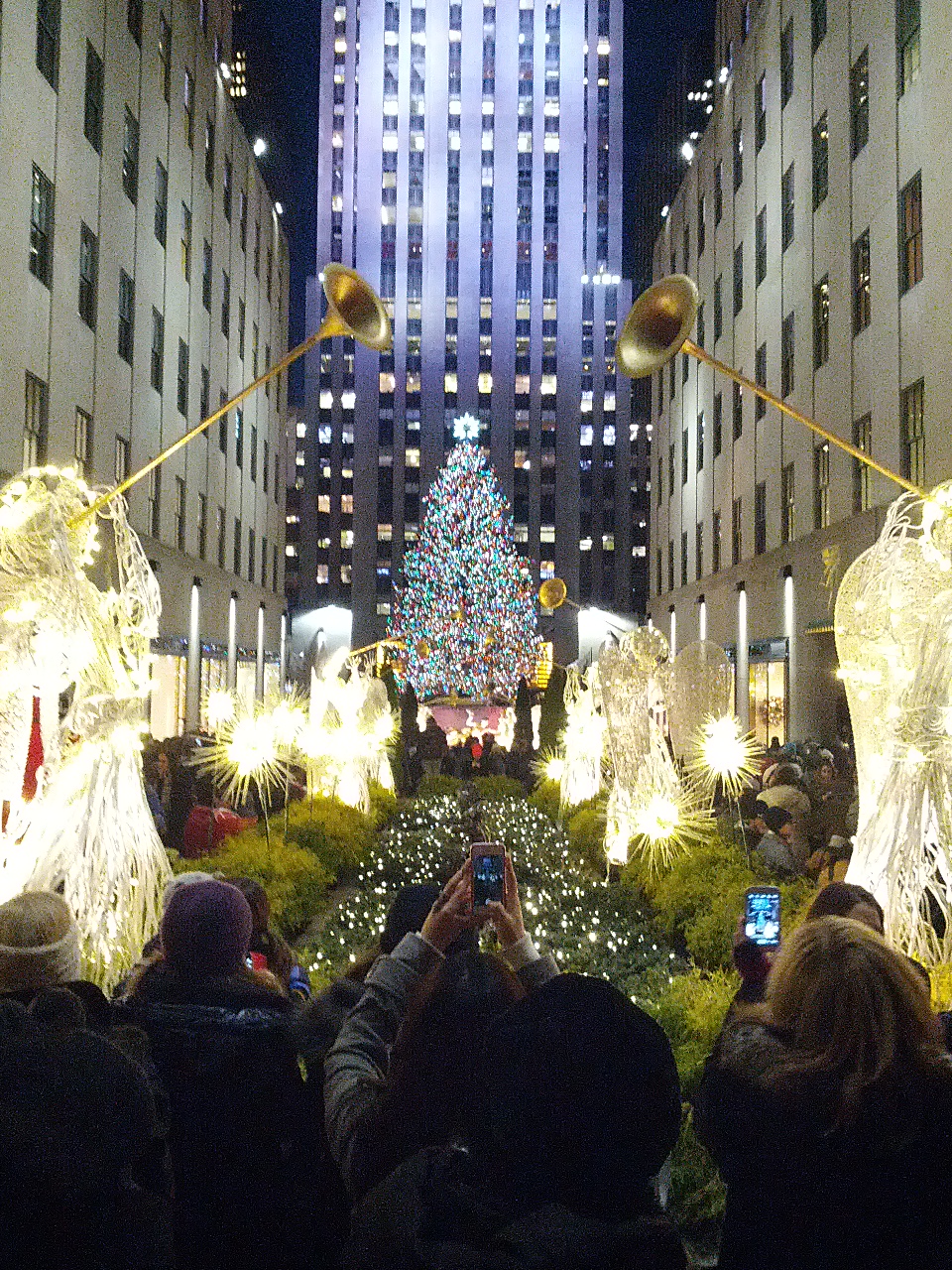
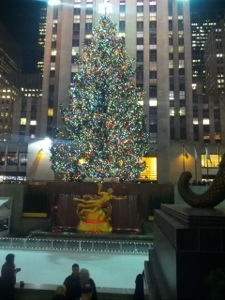
We left the Park at 59th and 5th Ave and headed in to see the tree at the Plaza and warm up.  Then down what must be the busiest shopping street in North America past Gucci, Louis Vuttion, Bergdorf Goodman, Tiffany’s and Harry Winston.  A bit of shopping and a quick trip past the Rockefeller Centre Christmas Tree.  We walked across 48th, skirted Time Square – it loses its appeal after a couple of visits – and back on the “1”Image

When we arrived in New York last year, we met Theria for the first time at a great little Italian Restaurant called Le Zie at 7th and 20th. We returned there to relive that meeting and to see Penny’s cousin Christina who has come in from Montreal to help celebrate the birthday that brought us here.  Reunions are so much fun!

This morning its snowing in New York and we are expected to get three inches.  It will be another great day for sure!

Posted in Uncategorized | 2 Comments

The Final Days

So it is finally here. January 12, 2013. Hard to believe that we have already been in New York for 100 days. We are busy moving our of our Casa New York and this afternoon we will be on our final flight home to Vancouver. A sad day in many ways but a happy one in others.

The last few days have been a whirlwind. We have been riding the subway to neighbourhoods we haven’t had the chance to visit. Sunday and Monday we travelled through Queens on the “F” and “7” lines, popping up at random stations and wandering the neighbourhoods to see what was there. We found areas much more like Vancouver, with a mix of apartments and single family residences with real lawns in the tony areas of Kew Gardens and Forest Hills. These areas were developed after the Queensborough Bridge from Manhattan in the 1920s and the introduction of commuter trains made commuting possible.

The “7” line is known as the “international express” and it doesn’t disappoint. At Jackson Heights we found blocks of Indian stores and restaurants and farther out the line were areas representing every ethnicity imaginable. At the end of the line is Flushing, home of the largest Chinatown in New York and one of the largest in the US. Walking the streets was like being in Hong Kong.

We visited Flushing Meadows – Corona Park, site of the 1939 and 1964 World Fairs and the home of the National Tennis Centre (and the US Open Tennis Championship). This is a 1200 acre jewel retained mostly as passive park. Also on the grounds is CitiPark, home of the New York Mets.

Long Island City right across the East River from Manhattan at 60th is a gritty area of warehouses and train yards and an increasing number of cultural institutions. It is also home to 5 PointZ a block of warehouse buildings that have been “painted” by some of the best graffiti artists in the world and protected. LIfe goes on in the area, seemingly blind to the artistry around them. Some of the work was remarkable, however it is a place that few tourists ever visit.

On Tuesday we took the “1” train to the end of the line at Van Courtlandt Park, another of the incredible parks legacy that has highlighted the development of New York. We walked “through” Washington Heights in two incredible tunnels carved out of the granite and connecting the neighbourhood to the “1” and “A” lines. Tryon Park is located in Washington Heights a residential neighbourhood with very mixed ethnicity. The park overlooks the Hudson River and George Washington Bridge to New Jersey and is home to the Cloisters. This neo-classical castle belongs to the Metropolitan Museum of Art and was constructed in the 1930’s with funding from John D. Rockefeller. It houses the art and architecture of medieval Europe, from the twelfth through the fifteenth century. We finished the day with a glass of wine and appies at the New Leaf Restaurant and a ride home of the “A” train.

On Wednesday we took the Metro-North commuter train north from Grand Central Terminal to Tarrytown – about 50 minutes north and a $18 return fare up the Hudson River. Metro-North operates a very frequent service up the Hudson (and on two other lines) making access to Manhattan effortless. It was a beautiful trip right along the river looking over to the escarpment in New Jersey to the west.

For those of you who know author Washington Irving’s tales (The Legend of Sleepy Hollow and Rip Van Winkle this is the area where they are based. The village of Sleepy Hollow is there along with its famous cemetery. We wondered around town, had lunch at the Sweet Grass Grill and heard the sound check for the Queen Revival Band at the local Tarrytown Music House that dates from 1887. A great excursion. Next time we will take longer trip here to visit some of the 1920s and 30s estates built by Rockefeller and other wealthy New Yorkers as retreats.

We finished the day with our last drinks and dinner at Seven where we spend a lot of time during Sandy and came to know the bartender, Kevin, who always took great care of us. We enjoyed a nice bottle of wine that Monika kindly provided a certificate for.

Thursday we had our last walk in Central Park. I wish I had taken the time to blog about this place because it is spectacular. The problem is there is so much to say it is hard to know where to start. We arrived when the park was in full leaf, watched the leaves change and fall and now we see it in its winter bareness. It is a remarkable place that you have to visit to understand. Our only regret is that we didn’t see it after a snowfall. Thursday nite we had dinner at Highpoint a local bistro where we have eaten many times.

Friday nite we joined took the “N” train from Time Square to Astoria in north-western Queens, returning to a great Greek restaurant we had visited earlier in the week. Penny’s cousins had recommended Bahari estiatorio for the best Greek food outside Greece and it didn’t disappoint. The restaurant hosted the final dinner with Penny’s cousin Theria with whom we have spent a lot of quality time while we were here.

This cousin thing is an interesting and scary reconnection after more than 30 years. When we arrived in New York, we connected with Theria and discovered that, of all the places we could have settled here, we are just 4 short blocks from her apartment! During Sandy, Theria was out-of-town but texted Penny to say that if we needed anything to go to Seven and find Kevin who would take good care of us. That text arrived as we sat at the bar at Seven, talking to Kevin. Too many coincidences! Thank you Theria, for embracing us and for all you added to our visit.

Lots has happened in New York during our 100 days here. Fall turned to winter; Sandy beat the crap out of the City which mostly thumbed its nose and moved on; the new building under construction next to our apartment on 21st grew from three floors to 14; there was a presidential election. Real life moving on in New York can.

What is more elusive from our time here are the things that have changed in us. It will take considerable reflection from a distance to fully understand them. We look forward to sharing these and our experiences with our friends at home. So for now, farewell Casa New York.

We want to get this up so there are no pictures for now. We will add some later today and update the blog.

Cheers
Penny and Ken

Posted in Uncategorized | Leave a comment

The Most Commonly Heard Phrase in New York

20130105-105738.jpg

“Stand away from the closing doors, please”

That’s right, this phrase is heard by about 4.5 million people who ride the New York subway system every day. Sometimes it is a recorded message and sometimes it comes from the conductor who sits mid-train and controls the train doors. I wouldn’t like to guess how many times it is repeated but with trains stopping at over 600 stations every few minutes, 24 hours a day on 23 lines, it has to be a lot.

The New York subway system is a remarkable thing. October 27 marked the 108th Anniversary of the decision to construct the “1” line from City Hall in south Manhattan north up Broadway to 145 Street on the Upper West Side – Hamilton Heights today – and into the Bronx. This service was quickly expanded south to Atlantic Avenue in Brooklyn, under the East River

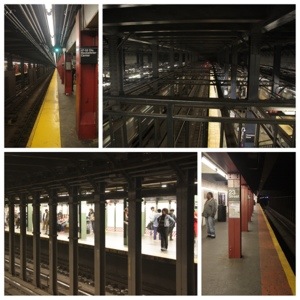
This is our most frequently used line which rumbles under the sidewalks along 7th Avenue and mildly shakes the floors as we sit in the bars and restaurants, or even lie in bed on a quiet Sunday morning. The plaque in the station at 23rd and 7th says it was opened in 1908 and refurbished in 1990. The cement floors, white and green tile and the steel columns supporting the street above are clearly that old.

For those old enough to remember the discussions in Vancouver in the 60s and 70s about mass transit, it is worth noting that the same happened in New York, however, these discussions happened in the 1890s. There was some agreement that the city and surrounding areas should prepare for mass transit but it was not agreed whether this should be elevated – several elevated railways were in operation in the City at the time – or underground. In the inner city, underground obviously won out, however no private company was willing to put up the enormous capital required to build beneath the streets. The City decided to issue rapid transit bonds, outside of its regular bonded debt limit, and build the subways itself. It contracted with the Interborough Rapid Transit Company (which by that time ran the elevated lines in Manhattan) to equip and operate the subways, sharing the profits with the City and guaranteeing a fixed five-cent fare. An early P3.

At the same time the Brooklyn Rapid Transit Company was expanding its holdings in Brooklyn – then a separate city – and wanted to expand into Manhattan. The City entered into contracts with both BRT and IRT and most of the subway system was built during the next 20 years by these competing companies. In the 1930s, the City of New York introduced the Independent Subway System which it owned and operated. The current line up 8th Avenue was the first line it built. In 1940 the three lines were brought together by the City and in 1953 a state created the New York Transit Authority, now part of the Metropolitan Transportation Authority which operates subways, buses, bridges and tunnels to and from Manhattan.

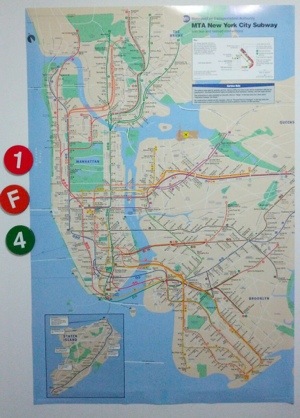
20130105-115722.jpgDespite the unification, a distinction between the three systems still exists. The IRT lines (now referred to as A Division) have numbers and BMT/IND (now collectively B Division) lines use letters. There is also a more physical but less obvious difference: Division A cars are narrower than those of Division B by 18 inches and shorter by 9 to 24 feet. For us, the “1” train runs up 7th Avenue, the F, B, D and M lines run up 6th Ave and if we walk over to 8th Ave we can catch the A,B or C lines.

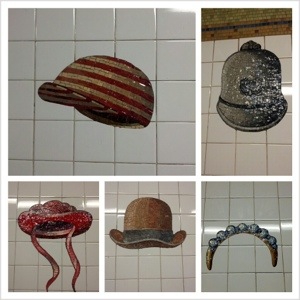
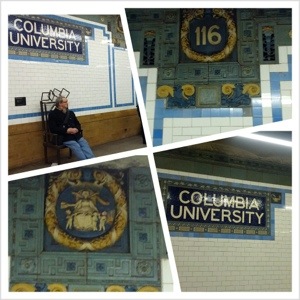
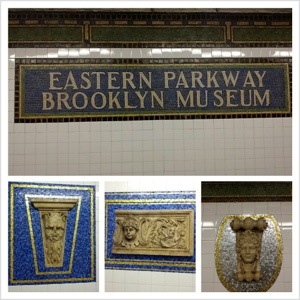
Given the age of the system, it is not surprising that most are a little tattered around the edges. On the other hand much of the original tile work from 80 or more years ago is beautiful, protected by the elements. They bring a timelessness that is appropriate.

20130105-224323.jpgThe system seems like a plate of spaghetti when you look at the map but it is a fully integrated system which serves the length of Manhattan, the areas north into the Bronx, north east into Queens and east into Brooklyn. The system carries about 140 million passengers a month; that’s about 4.6 million A DAY! Everyone in New York takes the train, it doesn’t matter if you are coming from the suburbs, travelling uptown or down on business, going out for dinner or the theatre or visiting the touristy places. The locals sit with blank faces, laughing inside I am sure at the tourists scouring their subway maps or trying to find their way on their smartphone app.

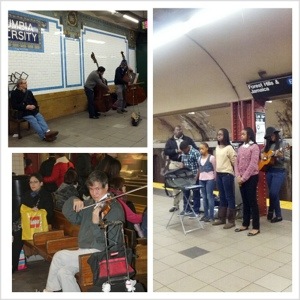
We have seen a few “solicitors” on the train, normally raising money for a worthy cause or the occasional “homeless” person trying to raise a buck.20130105-111421.jpgThe platforms often have buskers, playing or singing, all with their hats or cases out for donations. Yesterday we had a small Mexican group playing music on the train down to Battery Park.

There are few fancy ground level station entrances, just stairs emerging on the sidewalk above, marked with green and white globe lights. Below ground, many stations are vast caverns with many lines running through them. Even the above ground stations don’t seem out of place – almost as if they are part of the landscape.

20130105-111604.jpg20130105-111621.jpg20130105-111634.jpg Many stations have some unique tile work that distinguishes them. Dinosaurs and animal mosaics adorn the 81st Street station at the Museum of Natural History; hats of famous New Yorkers adorn the 23 and Broadway station; an Alice and Wonderland mosaic is at 50th and Broadway in the heart of the theatre district; and music and theatrical renderings near Lincoln Centre. There is even an “app” available to track the public art installed on the system.

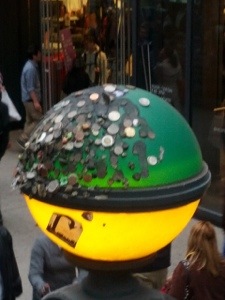
20130105-111907.jpgThis subway entrance has a unique bit of public art. It is located on 34th Street not far from the Empire State Building at a tour bus stop. The light has been adorned by coins and other collectibles secured by gum by tourists sitting on the upper deck of the bus. Notice the “toonie”?

On the trains themselves, there is the normal advertising you see on all transit systems. In addition there is a transit poster program that produced the graphic at the opening of this blog. We have actually seen all of these characters on the train and one night we saw a gentleman dressed as the Mad Hatter with signature hat, make up and platform shoes.

We use the subway system to go everywhere: Uptown, Downtown, Coney Island, Brooklyn and Queens and the Bronx Zoo. I was asked if I missed the car but I haven’t. The train is so convenient to go anywhere. An MTA sponsored challenge resulted in more than 20 “apps” that chart your walk to the appropriate subway station from wherever you are, the trains and transfers you should take and the walk to your destination. It is actually a lot of fun to pop up from a station and see what is in the area. The best part is we are now being regularly asked for directions, definitive proof we have become New Yorkers.

Posted in Uncategorized | Leave a comment

The Churches of New York

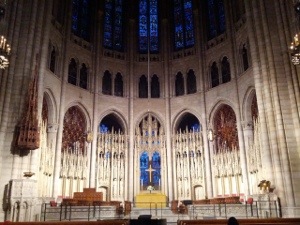
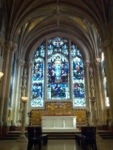
20121218-121507.jpgEvery guidebook on New York that you can buy – or at least the 7 that I have – mention them but I expect that they are not on the top of mind for most tourist’s. If you like history, architecture or music, or if in your walkabouts you are enticed by an open door, you might go in. But passing up on visiting and experiencing New York’s churches would be unfortunate, no matter what your religious views might be. These buildings have been a major influence in the making of the history and character of New York. And besides, many of them are absolutely stunning edifices.

New York City is probably the most linguistically and religiously diverse city on the planet. You can hear almost any language you can imagine on the street corner. The 8.6 million inhabitants communicate in some 800 different languages across the five boroughs. New York is also a religious city: 83% of New Yorker’s claim affiliation with some organized religion, one of the highest proportions in the United States. About 70% of these declared New Yorker’s are Christian and they are served approximately 2,000 churches and 4,000 informal places of worship. There are more than 1,000 Jewish synagogues. Any what was a big surprise to me, almost one million New Yorker’s are Muslins who worship in more than 100 mosques located around the City – including one within blocks of the World Trade Centre. Remember the controversy about that one?

Not every church building is remarkable. Many are not traditional places of worship at all, located in storefronts, schools and warehouse space. Along East Broadway in the Lower East Side are many micro-synagogues serving the various sects of the predominantly Jewish population. In Harlem, the area north and northeast of Central Park, it is reported that there are over 500 “churches”.

But there are many remarkable church buildings and we have taken the opportunity to go into several and to say they are magnificent would be a huge understatement – at least compared to the building in the Vancouver area. These include the St. Patrick’s Cathedral and St. Thomas Church in midtown on 5th Avenue, the Cathedral of Saint John the Divine in the Morningside District at Amsterdam and 110th and Riverside Church at Riverside Drive and 121st.

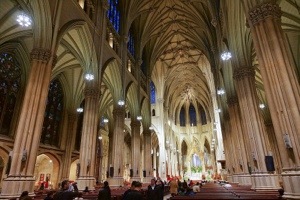
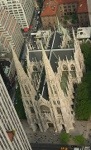
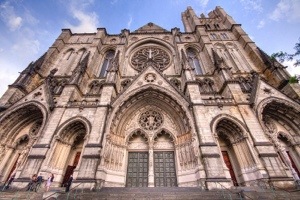
20121218-122605.jpg20121218-122619.jpgSt. Patrick’s is the largest Catholic cathedral in the United States and sits on a site originally intended for a cemetery. Hard to imagine that now as it sits in the middle of the major shopping district – at 5th Avenue and 51st – in the City. The gothic revival building – currently undergoing an exterior renovation – was conceived in 1850 when the site was well beyond the developed area of city. It opened in 1878 and seats 2,500 people. Adorned with intricately carved 20,000 pound bronze doors at the 5th Ave entrance, intricate carving throughout, a soaring vaulted ceiling, stunning stained glass windows and an organ with 7,000 pipes – that’s a lot – this is a magnificent place.

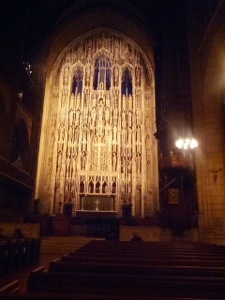
20121218-122036.jpgSt. Thomas is a slightly more modest building just two blocks further up 5th Ave. This Episcopalian church was built in 1905, although this was the fourth home for the congregation and the second on this site. This church is known for its many high society weddings including the lavish nuptials of Consuelo Vanderbilt and the Duke of Marlborough. Although not as grandiose as St. Patrick’s, the nave of this church is stunningly beautiful with intricately carved screens and choir stalls. We have been in this church 3 times; twice just to visit and for the choral eucharist on the second Sunday of Advent. During the first visit the huge pipe organ was being tuned and when the big notes were played it made the hair on your arms stand up. Andrew and I visited St. Thomas one afternoon and heard choir practice. Penny and I were blown away by the spectacular choral eucharist, capped with an incredible recital on the organ. You have to live it to understand the way these incredible buildings carry the sounds of voice and organ.

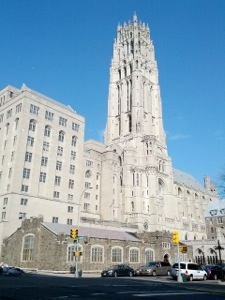
20121218-115314.jpg20121218-115333.jpgRiverside Church is a more recent addition to the scene. It was built in 1927 – 1930 and was funded entirely by John D. Rockefeller, who left an endowment that maintains the building to today. The design is based on the cathedral at Chartres, France, however, unlike other cathedrals supported by massive vaulted ceilings, Riverside is built on a steel frame and limestone and marble cladding. It is a huge edifice with a gothic exterior and a spire that soars 21 storeys above the street – the highest spire in the US. The spire houses the Laura Spellmand Rockefeller Memorial Carillon (JD’s mother) which is the largest in the world with 74 bells. We heard it play Sunday morning. The hour bell is the largest tuned carillon bell ever cast and when it chimes it gives off the a very deep chime that reverberates for blocks around.

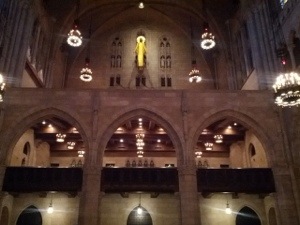
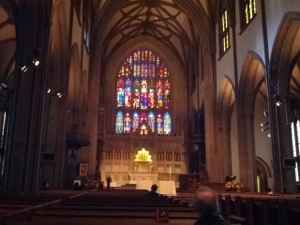
20121218-115602.jpg20121218-115610.jpg20121218-115748.jpgThe interior of the building evokes the same feeling as traditional vaulted ceiling churches but the steel frame allows less imposing arches giving the building a lighter look. The nave seats 2100 people. However, to my mind the most impressive part of this church is the pipe organ with its 21,000 pipes. We attended a service there on Sunday just to hear the organ and we were not disappointed. Hard to describe the way the music fills the sanctuary; when the offering was being presented, the organ belted out “Praise God from whom all blessings flow, Praise God all creatures here below . . . “ as I have never heard it. It was an incredible experience.

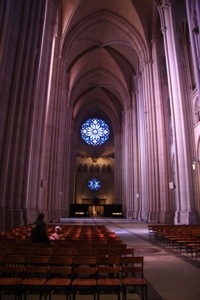
20121218-125856.jpg20121218-125917.jpg20121218-130130.jpgThese churches are spectacular but they pale in comparison to the Cathedral of St. John the Divine in the Morningside District near Columbia University on the upper, upper West Side. I have been in this building twice and plan on visiting again. St John’s is the home church of the Episcopal Bishop of New York and the church itself sits in a huge compound that includes beautiful gardens, statuary and office and residential space.

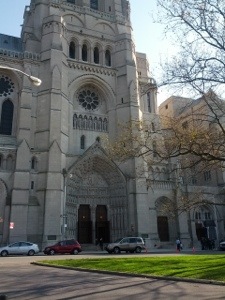
Construction of the cathedral itself began in 1892 and the first services were held seven years later. The building is just two-thirds complete with additional construction taking place as money is available. At that, the nave of the church is 600 feet long, 146 feet wide and the arches soar 100 feet above the floor. When the north and south transepts and transept dome are completed, St. John’s will be the largest cathedral in the world.

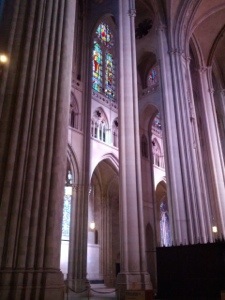
20121218-130201.jpg20121218-130227.jpgMedieval construction techniques have been used throughout the construction: the stone-on-stone buttresses that support the transept dome are massive. It is hard to describe the presence of this building which, despite being incomplete, is fully functional. If the money were available today to finish the north and south transepts, the crossing tower and the west towers, it is estimated it would take 50 years to complete construction. High above the nave and choir areas are incredible stained glass windows and at the west end one of the largest rose windows in the United States.

20121218-130215.jpg20121218-131059.jpg
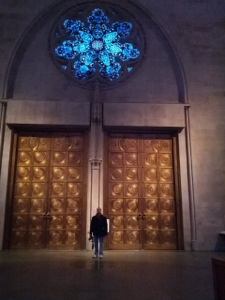
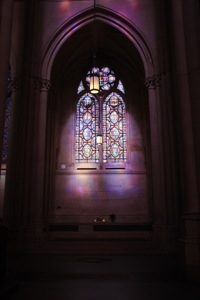
Except during services, there is no artificial light in the cathedral so it is the sun shining through these magnificent windows that provides the light. During my last visit here, the nave was very dark as the sun was behind clouds. As they parted, sunlight filled the huge space with the glow of coloured light. It was like an awaking. Eighteen foot high bronze doors guard the main west entrance, depicting scenes from the bible.

20121218-130239.jpgAround the outside of the choir area, behind massive 55 foot high columns are a series of smaller chapels, each with intricate carving, metal work and stained glass windows. Some of these chapels are able to accommodate more than 100. This may be the most impressive building I have ever been in: all I could do was stand in awe of its size, volume and significance. You have to hope that one day, likely long after our passing, this building will be completed.

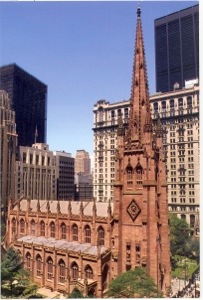
20121218-121102.jpg20121218-120053.jpgDowntown in the financial district are Trinity Church and St Paul’s Chapel at Trinity Church, two other historical churches. Andrew and I visited Trinity Church and the adjacent cemetery. The current church was built in 1846 and is the third church on this site. When completed, the steeple on this gothic revival building was the tallest structure in New York. Many prominent early New Yorker’s are buried in the adjacent cemetery, including Alexander Hamilton, a founding father, lawyer and first Secretary of State; Robert Fulton, inventor of the steamboat; and, William Bradford who founded the first newspaper in the City in 1725.

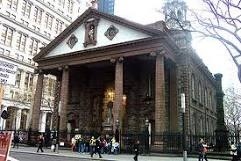
20121218-121112.jpgTwo blocks north is St Paul’s Chapel, the only extant church built before the American Revolution that is still in use. This building completed in 1766 on what was then an open rocky field, is located directly across Church Street from the World Trade Centre but was miraculously spared when the buildings collapsed. The interior of this church is not traditional as the walls are very colourful and is lit by Waterford crystal chandeliers. George Washington prayed here immediately after his inauguration as US President just down Wall Street at Federal Hall. Today the chapel is associated with Trinity Church and has become a monument to the first responders who lost their lives in 2001 as well as the home of Episcopal services.

There are so many other notable churches in the City that should be mentioned. Dr. Norman Vincent Peale (author of “The Power of Positive Thinking”) was the pastor at the Marble Collegiate Church at 5th Ave and 28th. The Abyssinian Baptist Church in Harlem was the home of Adam Clayton Powell, a congressman and civil rights leader and was the most powerful black church in America during the civil rights movement.

If you ever come to New York don’t pass up the churches. And if you want to see a real masterpiece, visit to The Cathedral of St. John the Divine.

Posted in Uncategorized | 2 Comments

Wandering the East Village

The really fun thing about New York – and Boston, as we wrote in our Boston Blogs – is that wherever you go there is so much history. There are famous places, and reminders of names and events that almost everyone of us has some awareness of. The other interesting thing is the transitions that New York neighbourhoods have gone through over the last 250 years and how those changes are reflected there today. The East Village may be the most transitional of those neighbourhoods.

Over the last two days, we spent several hours over two days wondering through the East Village and were amazed at its story. The East Village is located on the east side of Manhattan from about 14th Street down to Houston and from Broadway/Lafayette to the East River. The East Village references its location immediately east of Greenwich Village.

The East Village also has subareas. The blocks Immediately east of Broadway used to be known as the Bowery (if you don’t remember the Bowery read on). Since the early 1970s it has come to be known as NoHo, for “North of Houston.” Further east, beyond 1st Ave, is Alphabet City, so named because of the series of avenues named from the alphabet: Avenues A to D.

As New York developed up Manhattan most of the development before 1800 was on the west side into Greenwich Village and Chelsea, while the east side was primarily agricultural. Petrus Stuyvesant, the last Dutch Director-General of the colony of New Netherland until it was ceded to the English in 1664, is credited with moving development up Manhattan along Broadway. In 1651 he purchased land in what is now the East Village area for a “bowery” or farm in 1651. Stuyvesant and his descendants lived in the area for decades and have left a big mark on the community. Just north of the East Village, at 16th Street is a major park given to the City by his family and dedicated in his name.

It was the late 1700s when the East Village started to develop but there was not significant interest from New Yorkers. In the early 1800s, John Jacob Astor, then one of the richest men in the US, began buying land in the area. In 1825 he carved out Lafayette Street just east of Broadway and subdivided the area. What followed was a building boom period that produced many notable buildings that remain in use today.
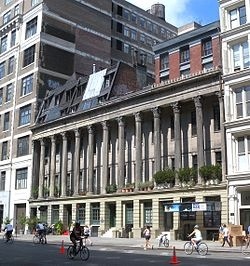
20121209-204845.jpgDeveloper Seth Greer developed Colonnade Row at 7th and Lafayette and just off Astor Place in 1833. This magnificent building contained nine Greek Revival townhouses built of marble and with a broad three storey colonnade and corinthian columns. Greer developed the complex “on spec” to attract wealthy New Yorkers. Pundits of the day expressed doubt that they would sell because of their location. However, soon people like Astor and Cornelius Vanderbilt purchased units, development took off and the East Village became the place to live for wealthy New Yorkers. Authors Washington Irving, William Makepeace Thackeray and Charles Dickens and Franklin Delano Roosevelt’s merchant father all lived here for a period. Today only four of the townhouses remain, the others having fallen to more recent development. There is some controversy here about the state of these buildings, being in need of significant restoration to return them to the glory they deserve.

When John Jacob Astor III died in 1849, he left $400,000 to develop a library across the street from Colonnade Row to hold his family’s extensive collection. The Astor Library was completed in 1854 and became the first, free-access libraries in New York City. It was so popular that two additions were made to the building by 1881. In 1905, the Astor collection was joined with two others to become the New York Public Library.
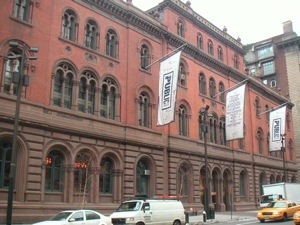
20121209-205905.jpgThis beautiful red brick and brownstone building was purchased by the City in 1967 and converted to a live theatre venue with six stages. It has been beautifully renovated and is operated as The PublicTheatre. Stages in this theatre have premiered many alternative and mainstream plays, including Hair and A Chorus Line .

The Public Theater has earned a name as an incubator of theatre. Its productions have won 42 Tony Awards, 151 Obies, 41 Drama Desk Awards and four Pulitzer Prizes. Fifty-four Public Theater productions have moved to Broadway, including That Championship Season; A Chorus Line; The Pirates of Penzance; The Tempest; the revival of HAIR; Bloody Bloody Andrew Jackson; The Merchant of Venice and The Normal Heart.
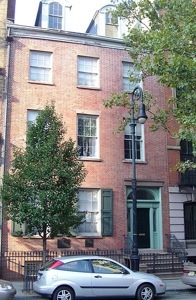
20121209-210239.jpgIf you walk up Lafayette and keep right onto Stuyvesant Street at Astor Place you will find a beautiful set of Federal-style brownstone residential buildings anchored at one end by the Stuyvesant-Fish House built in 1803. The house was one of five owned by the Stuyvesant family on their private lane and was built by Peter Stuyvesant, the great-grandson of Petrus Stuyvesant as a wedding present to his daughter, Elizabeth, and his son-in-law, Nicholas Fish. This was the birthplace of Hamilton Fish, a future New York State Governor, US Senator and the 26th US Secretary of State (1869 – 77) under President Ulysses Grant. Fish has been considered one of the best Secretaries of State in the United States’ history; known for his judiciousness and reform efforts. It was one of five houses owned by the family on their private lane.
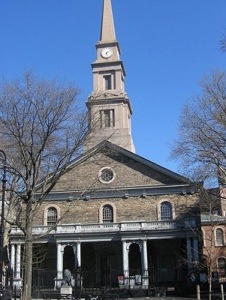
20121209-210246.jpgAt the end of the block is St Mark’s in the Bowery Episcopal Church built in 1799. This is the second church on the site, the first having been built in 1660 by the Stuyvesant family. There is a cemetery In the yard adjoining St. Mark’s which hold the remains of Petrus Stuyvesant (1672); Nicholas Fish, a general in the revolutionary war; John Colt, brother of the maker of the Colt revolver; and Daniel M. Tompkins, former US Vice President under President John Munro.
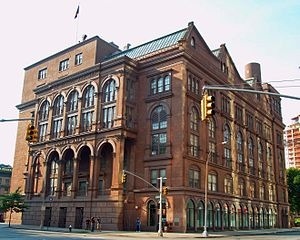
20121209-210732.jpgOn the corner of 3rd Avenue and Astor Place is Cooper’s Union. Coopers Union was created in 1859 by Peter Cooper, a self educated industrialist who built the first steam locomotive in the US, made the first steel rails and was a partner in the first transatlantic cable venture. Unable to afford school, Cooper committed his wealth to this educational institution that specializes in design, architecture and engineering. From its beginning and continuing today, the school provides free tuition to those who qualify for admission.
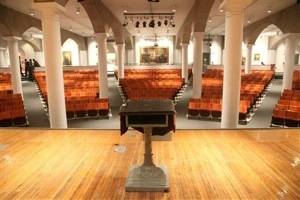
20121209-210836.jpgIn the basement of the Union is the Great Hall. This grand meeting place – the largest in New York in its day – was inaugurated by Mark Twain in 1859 and made famous by the “Right Makes Might” speech of Abraham Lincoln (1860) which is credited with winning him the US Presidency.
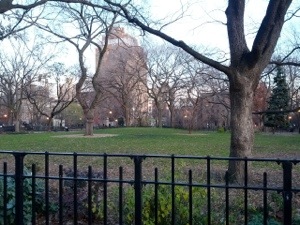
20121209-210941.jpgTwo blocks further east is Tompkins Square, created in 1874 as a remembrance to Daniel Tompkins, and now a formal English Garden. This park has been the location of many significant events in New York’s history. In 1857, immigrants protesting unemployment and food shortages were attacked by police. In 1863, the deadly Draft Riots occurred in the park. In January 1874, the Tompkins Square Riot occurred in the park when police crushed a demonstration involving thousands of workers marking an unprecedented era of labor conflict and violence. In 1877, 5,000 people fought with the National Guard when they amassed to hear Communist revolutionary speeches.

More recently, Tompkins Square was also the location of the first recorded Hari Krishna chanting event outside India. And in August 1988, a riot erupted in the park when police attempted to clear the park of homeless people; 44 people were injured. And does anyone remember Daniel Rakowitz? He shocked the neighbourhood in 1989 when he murdered Monika Beerle, dismembered her, made a soup out of her body and served it to the homeless in the park.

From its reputation as a symbol of the city’s increase social problems, Tompkins Square Park has become a beautiful neighbourhood park full of towering elm trees, formal gardens and parents with kids and dogs.

The East Village flourished for many years but by the end of the 19th century, the area had gone from expensive elegance to industrialization and declined to one of the poorest neighbourhoods in the City. As the wealthy moved uptown to newer neighbourhoods, this area became the first landing place for thousands of Irish, Jewish, German, Ukrainians and Puerto Rican immigrants. And for many years, the area along the Bowery had the distinction of being New York’s skid row, rife with unemployment, drugs, gangs and prostitution. Do you remember the Bowery Boys? These were the “bums” who made this area home.

Today, the East Village is an area going through yet another transition. From Broadway to 2nd Avenue, many of the older buildings have been updated and many replaced with high-end condos.
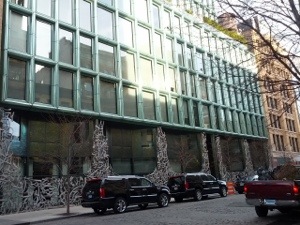
20121209-204314.jpgOne of the most extreme examples is at 40 Bond Street, a wide cobblestoned street, lined with a mix of buildings from the 1800s and replacements developed over the last 5 years. In front of this ultra-modern building, drivers line the curb in their Cadillac Escalades awaiting the pleasure of their employers who live in the very swank building. Condos in the area are often priced in the millions.

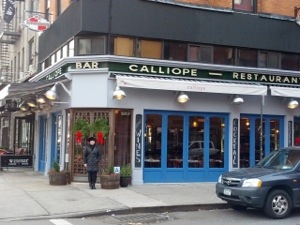
20121209-203614.jpg20121209-203444.jpgFortunately much of the neighbourhood retains its bohemian character. Narrow, tree lined streets with brownstone walkups are lined with small shops, tattoo parlours, experimental music clubs and theatres. There are restaurants to meet every taste and pocketbook. Even one named after Penny!


Many of the larger buildings are owned by New York University that has spread across Broadway from Greenwich Village so there are a lot of students in the area. The entire area has a bit of an “edge” to it, especially along the sourthern edge at Houston Street but it was well worth the two afternoons we spent wandering around. One of the most interesting we have visited.
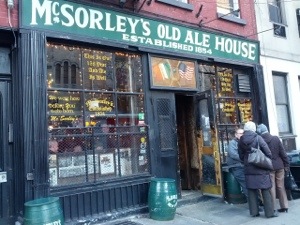
20121209-203854.jpgBut one of the neatest places in the area is McSorleys Old Ale House on East 7th Avenue.
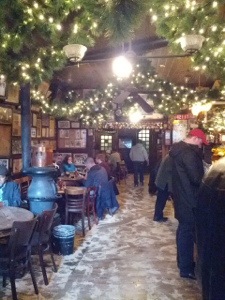
20121209-203920.jpgThis saloon was opened in 1854 as a men only saloon and has continuously operated ever since, even through Prohibition. The exterior and interior of the building are pretty much the way it was 170 years ago with sawdust covered wood floors, a potbellied wood stove in the middle of the room and walls adorned with memorabilia including period newspaper articles, pictures and an original wanted poster for John Wilkes Booth, Abraham Lincoln’s assassin.

And women were not welcomed at McSorley’s until federal law forced it in 1970!
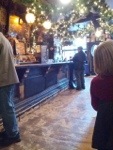
20121209-204029.jpg20121209-204043.jpgThey only serve their own light or dark ale – two glasses for $5. A remarkable place that was mostly full at 3:30 in the afternoon when we stopped for a bowl of homemade chili. One of the uniquely New York places that can’t be missed.
Posted in Uncategorized | Leave a comment

Checking In At Our Two Worlds

We have now been in New York for 8 weeks. How time flies! So how do we feel about our adventure? Last week, we got up way too early and flew back to Vancouver for four days. As we left our Casa New York, we tried to decide whether this trip was “going home” or another excursion from our Big Apple home. While we know that this adventure will end on January 12, for the time being we feel so much at home here. Life is very different that it would be in Vancouver but we have loved seeking out all that is New York.
20121204-135609.jpgThe trip home was exciting because we were returning to see the completed renovation in the condo for the first time live. And we were not disappointed.

20121204-135541.jpg20121204-135553.jpgThe kitchen and bathroom are a little different than what we set out to do but we adjusted our ideas as we went along and are blown away by how beautifully it all came together. Most decisions had been made before we left – one the day before we left – but only 60% of the work was completed. We had seen pictures as the work progressed, so we knew the “look” but standing in the finished product was amazing. Who knew we could get to this end? I wanted to cook something in the new oven and convection microwave but our visit was so short it didn’t make sense to provision the place. We are looking forward to showing it off when we get home.
20121205-124750.jpgWe were also getting the opportunity to reconnect with family and friends and we did as much of that as possible. We had dinner at our favourite Commercial Drive restaurant. We visited Lauren and Peter and our beautiful granddaughter Rachel. The Friday Night Dinner Club – with a few additions – celebrated Patricia’s birthday. Penny went to the gym for her workout and to reconnect with her “gym bags”. I chased FedEx all over Vancouver trying to get the Coldplay tickets that had to be sent to Vancouver rather than our New York address. It rained!

Oh yah, did a mentioned it rained?

20121205-124828.jpgBut when Sunday morning arrived – again way too early – we were excited about returning to Casa New York. Our adventure continues after a little break and we couldn’t be happier. It will end too soon. We have seven weeks left to walk, talk, experience and enjoy this great city. We have done and seen a lot but we have only scratched the surface.

We have left most of the great museums for bad weather days that have not yet arrived. So there will be days at the Met, the Frick, the MoMA, the Guggenheim and others. We have tickets to see Leonard Cohen at Madison Square Garden, Chris Botti at the Blue Note Jazz Club, Coldplay at the Barclay Centre and the Rockettes at Radio City Music Hall. There are still neighbourhoods to wander, restaurants to try, incredible landmarks to see. And we have resisted going to Staten Island and Coney Island because of the damage caused by Hurricane Sandy: they are on our list. Too much for the time we have.

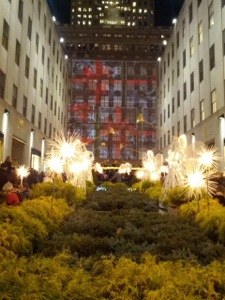
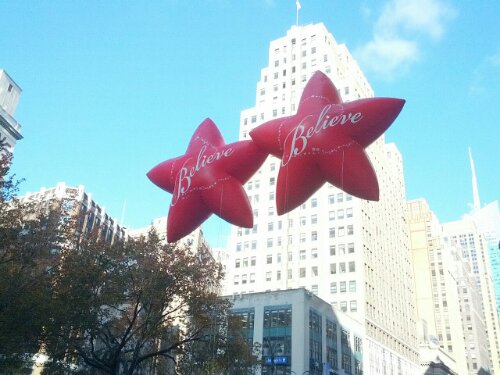
20121204-223149.jpg20121205-124726.jpg20121204-223221.jpgChristmas in New York is also in full swing. When Santa’s sleigh crossed the finish line at the Macy’s Thanksgiving Day parade, the season officially began. The most spectacular sites are at Rockefeller Centre with the famous Christmas tree where tens of thousands of people travel daily to have their pictures taken and Radio City Music Hall all decked out for the Rockettes Christmas Spectacular.

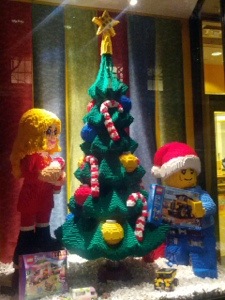
20121204-223255.jpg20121205-124808.jpgStore windows are decorated including elaborate displays at Lord and Taylor and the Lego Store. And the Christmas sales are in full swing. There are Christmas Tree stands on the sidewalks in most neighbourhoods and wreaths and lights are appearing in stores and apartment lobbies. The outdoor Christmas markets at Bryant Park and Union Park are in full swing along with the indoor market at Grand Central Station.

20121204-223553.jpgAnd of course the outdoor rinks in Central Park, Bryant Park and Rockefeller Centre are waiting for us to lace up the skates. There is Christmas music everywhere. And Trader Joe’s will soon have Gingerbread Pancake mix on the shelves. New York is full of the Christmas spirit!

The only thing that has not co-operated is the weather. Since we returned, the sun has shone and the temperatures have been near 60 degrees – shirtsleeve weather not wool jackets and scarves. Hopefully it will cool off a bit in the next few days so it will feel like December. And we wouldn’t even complain about a New York snow storm!

So it was great to be home for a few days but we were happy to return to our “home” here for the next seven weeks. We love this City and look forward to continuing the adventure. It will be great to have Lindsay here for the holidays and to connect with our families who are here for the holidays. If only we could slow down the clock a little because the time is going too fast!

Posted in Uncategorized | 1 Comment

Boston 3: Taken Over by the Crimson Tide

In the first two chapters of our Boston Blog we talked about our trip around the City, through the parks, open spaces and neighbourhoods and then about our trip down memory lane with the Ride of Paul Revere and the origins of the American Revolution. In this blog we want to talk briefly about the third leg of our journey, to the academic heartland of Massachusetts, Harvard University.

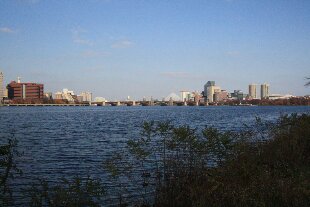
Across the Charles River from Boston is Cambridge, Massachusetts, Cambridge was named in honor of the University of Cambridge in England, an important center of the Puritan theology embraced by the town’s founders. Cambridge is home to two of the world’s most prominent universities, Harvard University and the Massachusetts Institute of Technology. In 2010, the city’s population was 105,162, and added to Boston’s population of 617,600 the two cities are about the same size as the City of Vancouver.

imageCambridge is a college town – being the home of two of the three top universities in the world, the Massachusetts institute of Technology and Harvard – a lot entrepreneurial – being the home of a significant campus of established and start-up technology and biotechnology companies which feed off the universities – and a lot residential. When you cross the Commonwealth Bridge from Boston, you are struck by the massive buildings housing these high-tech and bio-tech tenants, many having been incubated at the universities and others drawn there to access the research and other resources they offer. We only had a short time to visit MIT but were impressed by the imposing scale and activity of the campus. We were also impressed that the subway system stops right at both campuses.

We did get to spend a few hours on the grounds at Harvard and in the neighbourhood around it. The experience was as magical as the legendary status that the university would suggest.

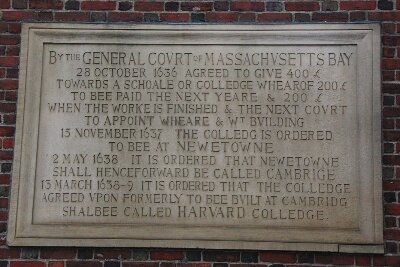
imageHarvard (officially The President and Fellows of Harvard College) is the first corporation chartered in what is now the United States, having been constituted in 1636 by the Massachusetts legislature and making it the oldest institution of higher learning in the country. We found this plaque on the wall at the entrance that details the origins of the university by the Commonwealth of Massachusetts.

Harvard is the U.S. university that is both closest to the British model of university education, yet distinctly American in identity and outlook. It is comprised of 10 academic units (Arts and Science, Education, Engineering, Graduate Studies, Government, Continuing Education, Dental, Divinity, Medicine and Law ) and the Radcliffe Institute of Advanced Studies. Harvard began as an all boys school and Radcliffe was the female counterpart until the schools amalgamated in the 1960s. The Kennedy School of Public Administration sits along the Charles River on the southern edge of the campus.

About 6% of the applications for admission are successful each year. Successful applicants are in the top 5% of high school graduation and SAT and ACT scores must be in the highest 25%. There are about 21,000 students and 2,100 faculty at the university at any one time.

Annual tuition is based on income and significant financial aid is provided to every student. Qualifying students from families earning less than $65,000 annually pay nothing to attend while fees, maxing out at 10% of income, are paid for incomes above $65,000. Stated tuition in 2012/13 was $37,600 and room and board was $13,600. In this current year, the university provided $166 million in tuition assistance to students. This is possible because of the $32 billion endowment held by the university. It is interesting to note that the undergraduate student body numbers about 1/3 of the total enrollment at 6,675. Of these, 97% are expected to graduate the 6 year program. The genders are represented equally among the student population. Out-of-state students represent about 85% and about 20% are international student. 97% of students live on campus in the various residences that surround the Yard.

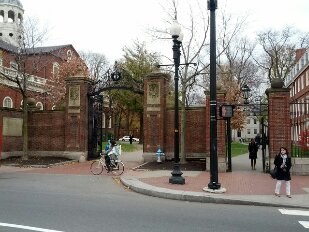
imageWe entered the campus through Johnston Gate which is considered to be the main entrance to the university off Massachusetts Boulevard. Not very ceremonial but remember this entrance was created when horse and carriage trade was the primary means of transportation.

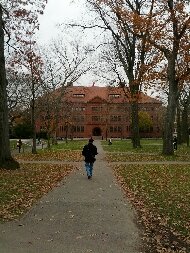
The campus developed around the Old Harvard Yard, a beautiful open quadrangle surrounded by historical buildings still in use today. The Yard is filled with beautiful red oak trees which provide a natural canopy. Amazing that we may have rubbed shoulders with a future US President or states-person as we walked the paths Harvard certainly has its share of notable graduates. Recognize any of these?

  • Ashley Judd (2010) graduated from the Kennedy School of Public Adminstration
  • Barak Obama (1991) was the first African American editor of the Harvard Law review and his wife Michelle (Law, 1988)
  • Yo-Yo Ma (1976) won an honourary doctorate in music
  • George W. Bush (1975) earned an MBA after earning a bachelor’s degree from Yale.
  • Ben Bernanke (1975) earned a business degree
  • Benazir Bhutto (1973) Pakistan’s first female prime minister
  • Tommy Lee Jones (1969) and his room mate Al Gore (1969) who was a politician even at Harvard: a government concentrator, Freshman Council chairman, and a member of the Harvard Undergraduate Council and Young Democrats.
  • John Lithgow (1967) where participated in everything from opera to ballet to directing.
  • Jack Lemmon (1947) who served as vice president of the Dramatic Club in 1944, having starred in The Playboy of the Western World.
  • Norman Mailer (1943) the Pulitzer Prize-winning author who concentrated in engineering sciences while at Harvard.
  • David Rockefeller (1936) of the New York Rockefeller family eventually became chief executive officer of Chase Manhattan Bank
  • Archibald Cox (1934) who became the special prosecutor during the Watergate investigations.
  • Helen Keller (1904 Radcliffe) was the first deaf and blind person to earn a Bachelor of Arts degree.
  • Franklin D. Roosevelt (1903) who was Editor-in-Chief of The Crimson and lived in Adams House while his cousin Theodore Roosevelt (1880) was inaugurated president of the U.S.
  • Ralph Waldo Emerson (1821) who entered Harvard College at the tender age of 14.
  • John Quincy Adams (1787 and 1790) who turned his education and time as a flutist in the college band into the Presidency of the United States.

An impressive list of graduates to be sure.

image image
Johnston Gate takes you directly into the Old Harvard Yard, the original campus area. The buildings on the Old Yard and adjacent areas are arranged in a series of quadrangles. Many of the buildings on the Yard date back to the 1700 and 1800s and are for both residential and academic uses. Massachusetts Hall on the west side of the Yard was built in 1720.

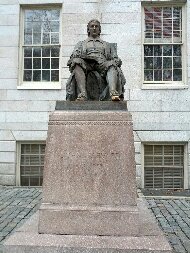
imageA statue of John Harvard, the original benefactor of the university sits prominently in Harvard Yard. Legend has it that if you want to be admitted to Harvard, you need to rub the toe of his shoe. Hundreds trek there annually and, while the rest of the bronze statue is tarnished with the weather, the toe of his shoe glistens brightly in the sunshine.

image A typical residence building at the north end of the Yard, Holworthy Hall, was built in 1812 to honor the largest donor of the day who contributed £1,000. In a mirror quadrangle to the east of the Old Yard are the main Weidner Library and the Harvard Memorial Church.

imageimageimageNorth of Cambridge Boulevard – the main thoroughfare running through the City – is the Science building and the magnificent Faculty of Law (Austen Building, 1883) and (Langdell) Law Library. Amazing to think of the famous law graduates that have passed through these halls and lecture theatres. As we wandered the buildings we joined groups of prospective students (some with their parents) being toured around the campus by senior students. We picked up a few tidbits: For example your chances of getting a private room increase if you ask for specific dorms.

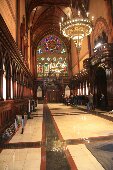
imageimageMemorial Hall (1878) is a magnificent church-like building with soaring wood vaulted ceilings and stained glass. The building which contains a massive meeting room/dining hall, a large foyer hall commemorating Harvard grads who have perished protecting the country and a large performance and music theatre. This building is reminiscent of a church, with stained glass and soaring arches. The building is so big, it was hard to get a clear picture.

It is hard to comprehend the size of the campus. It is so large and so integrated into the community that is would take a much more time to find and visit than we had. If you go, download the interactive campus map from the Harvard website along with the self guided narrated tour you can put on your smartphone or tablet. Or visit the visitor centre and get a personalized tour from a senior student.

Adjacent to the main part of the campus is Harvard Square, a commercial/retail/ restaurant area full of great little shops that support the campus. We went into the bookstore, which like many other university bookstores in the US is run by Barnes & Noble. They have a computer controlled book publisher/binder that can take any electronic file or old textbook and duplicate it and bind it in minutes. And we of course visited the Harvard “equipment” store to pick up some trinkets.

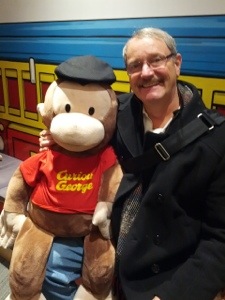
20121126-110250.jpgFinally we stopped to visit Curious George where I made a new friend who obviously has great taste in hats. George advised us to take in all that Boston and Harvard have to offer and to buy one of his books for our grand daughter. We took his advise.

If you ever go to Boston, you should plan on a visit to Harvard. It is one of the most impressive places you can imagine. We felt smarter just having been there. And on the day we left Boston, Harvard beat Yale 34-24 in the annual classic football game.
Posted in Uncategorized | Leave a comment

Boston 2: Travelling Back to More Revolutionary Times

We began Boston 1 with the opening verse from Longfellow’s The Ride of Paul Revere which relates the most publicly recognized event of the American fight for independence. Boston is recognized as the home of the American Revolution and the City is full of reminders of the important people, places and events American history. I expect that has to do with celebrating their revolutionary past, something we don’t get to enjoy in Canada, perhaps to our detriment. The historical significance of the area is reflected everywhere, and Americans and others who come here have the opportunity to re-live this history.
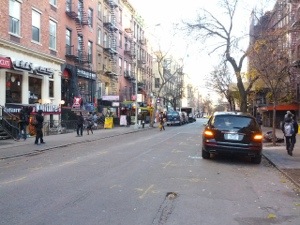
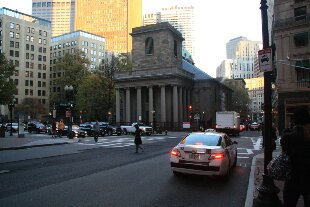
image The history is everywhere. A short block from our hotel is Kings Chapel founded in 1686. The current building was constructed in 1749 and Paul Revere cast the the bell for the church steeple in 1816 at his Revere & Sons foundry: “the sweetest sounding bell I have I have ever cast”.

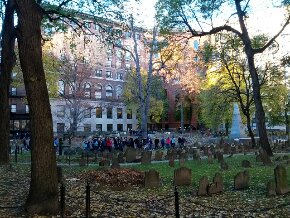
On the same site is the Kings Chapel Cemetery, the oldest in Boston with headstones dating from the 1600s. Mary Chilton, the first European woman off the Mayflower is buried here along with former British military and American Revolution patriots, the first governor of Massachusetts and even a pirate or two.
image

Ben Franklin’s parents, Paul Revere and three signatories of the Declaration of Independence. – John Hancock, Samuel Adams and Robert Trent Paine – are buried just down the block in the Granery Burial Ground which was across the street from our hotel. image There is a daily pilgrimage through these burial grounds from sunrise to dark.

Looking toward the North End from our hotel room, we had a clear view of the Old North Church where those famous lanterns were hung in April 1775 to signal the movement of British troops to Lexington and Concord and the opening battles of the American Revolutionary War.

20121125-105448.jpgJust a block down the hill from Kings Chapel is the Old South Meeting House. This building was constructed in 1729 by a breakaway congregation from the First Church of Boston. 20121125-105604.jpgThis was a regular “hangout” for the revolutionary colonists as they conspired and spoke out against British rule. It was at this building on December 16, 1773, during a debate on British taxation that Samuel Adams riled up 5,000 patriot colonists resulting in the assault on British ships in the harbour and where 342 cases of tea was thrown into Boston Harbour as a protest. History’s most famous tea party! Benjamin Franklin was baptised in this building.

In 1872 the Great Boston Fire swept through the area and almost destroyed the church. The congregation made the decision to move to the newer area of Back Bay where it continues to worship in the New South Church, returning for an annual commemoration of the building’s role in the revolution.

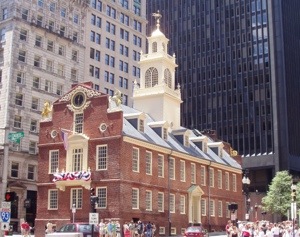
20121125-105720.jpgDown the street is the Old State House (1713). The American Revolution took root in this building when James Otis delivered a fiery speech against the Writs of Assistance passed by the British Crown which taxed imports to the colonies. In 1768, the local legislature refused to rescind their call for united resistance against this British taxation of the colony, leading to the occupation of the city by British troops.

In March 1770, British troops fired on protestors throwing snowballs and rocks at the building, killing five in what has become known as the Boston Massacre. And in 1776, the Declaration of Independence was first read to the people of Boston from the exterior balcony. After the Treaty of Paris was signed in 1783 giving the 13 colonies independence, this building housed the Commonwealth of Massachusetts government. You can feel the history here, it oozes from the buildings; it is in the air.

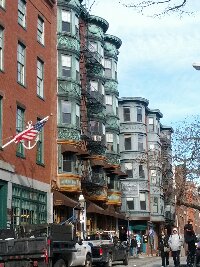
image Beyond downtown is the North End, which was the site of the original settlement along Boston harbour. While most of the original buildings were replaced in the 1800s, there are many landmarks from the early development. They are built of wood with red brick facing and they border narrow cobblestone streets.

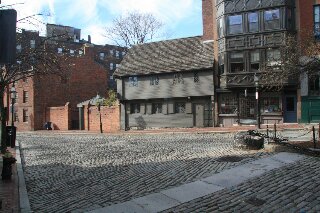
image Paul Revere and other notable patriots were born and raised in this neighbourhood. The house Revere bought in 1760 and where he and his two wives and 16 children (11 survived) lived for 30 years still stands at 19 North Square.

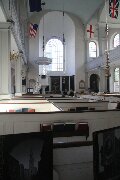
image The house is only a short walk from the Old North Church built in 1723 and the oldest active church still standing in Boston. You can almost feel the designers of the American Revolution on these streets today, plotting against the British in the local pubs. The church sits on Salem Street, off Hanover Street through Paul Revere Mall which commemorates the primary participants in the Revolutionary War. The church still has a large Episcopalian congregation and observes regular services. The interior of the church is a remarkable reminder of its British heritage with a strong Georgian style (similar to many buildings around Boston) and its strong ties to the Church of England. Note the pewboxes lining the nave rather than the more modern benches and the height of the lectern above the congregation.

image From the church bell tower, church sexton Robert Newman and Captain John Pulling hung two lanterns – “two if by sea” – as a warning to Paul Revere and William Dawes waiting across the Charles River in Charlestown, about the movements of the British troops sent to seize arms and arrest the patriot leaders. These riders – and a number of backups in case they were arrested by the British – warned Samuel Adams and John Hancock in Lexington of the approaching British troops under the command of Lieutenant Colonel Frances Smith.

At dawn on April 19th, the British and patriot troops fought the first battle of the American Revolutionary War on the green in Lexington. The patriots were overwhelmed but Adams and Hancock had fled toward Concord. The British marched on to Concord where 500 patriot troops were waiting and repulsed the much stronger British forces at the North Bridge. The British released their patriot prisoners and retreated to Boston, suffering further losses through guerilla attacks along the road.

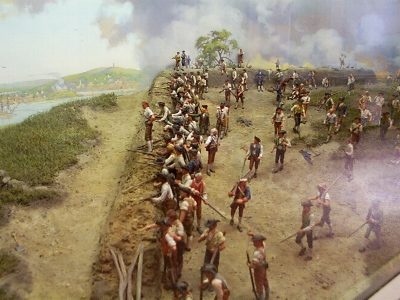
20121125-105956.jpgFrom the Old North Church tower, the monument to the Battle of Bunker Hill in Charlestown is clearly visible. This monument is a tribute to the this third major battle of the war, on June 17, 1775. However, it is an interesting fact that the monument is actually on the slightly higher adjacent Breed’s Hill. Although he was ordered to establish an offensive position on Bunker Hill from which the patriots could bombard the City of Boston, Colonel William Prescott determined that this position would be vulnerable from the higher Breed’s Hill and moved the patriot installation there. The Battle of Bunker Hill, on June 17, 1775, the first major battle after Lexington and Concord, was the first patriot – British encounter where the revolutionary army held its own through two British assaults. This buoyed the Americans even though on the third assault by the British, the Americans were overrun.

Today, the sections of the North End closest to downtown Boston have become “Little Italy”, the home to over 200 Italian restaurants. Walking along Hanover and Salem Streets, and the smaller ones that connect them, you can find every kind of Italian fare you can imagine from large tourist oriented eateries to smaller (30 seat) family style restaurants. We ate at a great little restaurant in the heart of Little Italy called Pagliuca’s Ristorante Italian off Hanover Street. It was a family affair and the service and food was great. We just need to go back and visit Michael’s Bakery for dessert. For a picture of our fabulous meal, check out my post on Facebook.

If you just go to Boston for the history, you will not be disappointed. There are so many memorials to those events and people who forged the US independence and defended individual rights in the American Civil War 100 years later. If you do a little reading before you go, walking the streets and visiting the landmarks will be even more meaningful. But don’t go just for the history, it is a beautiful City and I expect in spring or early fall it is even more beautiful than we saw it.

Posted in Uncategorized | Leave a comment

Boston 1: Listen My Children and You Shall Hear,

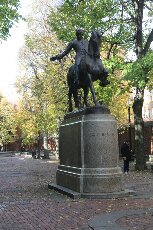
imageOf the midnight ride of Paul Revere,
On the eighteenth of April, in Seventy-five;
Hardly a man is now alive,
Who remembers that famous day and year.

The ride of Paul Revere has become the symbol of the resolve of American patriots leading to the American Revolutionary War and although the 1860 depiction of the Ride of Paul Revere by Henry Woodsworth Longfellow employs a a little poetic licence, you can’t help but be caught up in the real history that lives here and frames the story of American independence.

imageWe spent four days in Boston last week and there is so much to comment on it couldn’t be managed in a single blog. So consider this: BOSTON 1. Bostons 2 and 3 will follow.

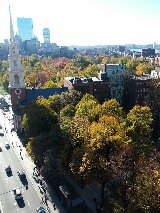
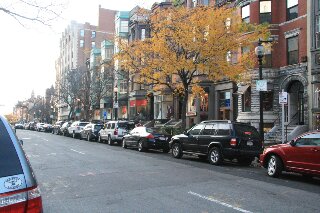
We stayed at the Klimpton Nine-Zero Hotel on Tremont Street; south east side of Beacon Hill just above the business district. Our room looked west over Boston Common, Back Bay and the Charles River and northeast toward the famous North End. Most of Boston was within an easy walk and Cambridge – the City, not the university – was just across the Charles River by subway.

imageimage
image
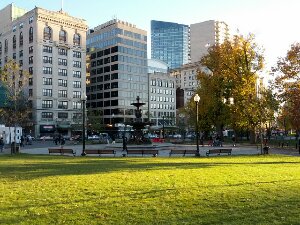
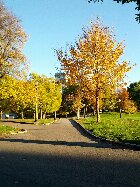
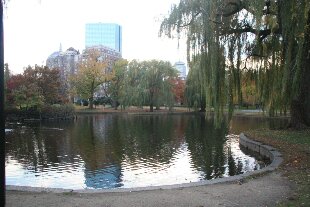
At the centre of the City is Boston Common. This is the oldest public park in North America, dating from 1635 when the reclusive Anglican minister William Blackstone sold his property to the townspeople of Boston. Each household was assessed six shillings for the 44 acres of open land which was held “in common” by all residents.

imageimage
The Common was first used as a common pasture and later became a training ground for the British Army, a place to hang pirates and witches or publically punish criminals in “stocks”. It has also served – and does today – as a place for public oratory and discourse. Today the park and adjacent Public Gardens serve as an quiet open space in the middle of the City. At Frog Pond, they were installing the much anticipated outside skating rink. The Common is much smaller than Central Park but as important to Bostonians.

image

image
Boston has many other beautiful parks and open spaces. The “Emerald Necklace”, a series of mostly linear parks leading west from Boston Common was designed in the 1880s by Fredrick Olmstead of Central Park fame. The “greenway” down Commonwealth Avenue west from the Public Gardens is the beginning of this chain of interconnected parks and greenways. The median conntects with the Back Bay Fens just a block from Fenway Park, home of the Boston Red Sox. The Fens are a series of ponds and marshes and provided the inspiration for Fenway – the way around the fens. The baseball stadium, not far from the commercial and residential areas of Bostoiin, much like at Wrigley Field in Chicago, is now 100 years old.The City has also taken the opporunity to develop public parks and open spaces along much of it inner city subway lines.

Speaking of subways, did you know that Boston had the first subway line in the US? Its first line opened in 1897, one year before New York. The developers designed the system to us steam engines but quickly realized that steam trains would not work well underground without ventilation. As a result, the trains were horse-drawn.

image
Above the Commons on the top of Beacon Hill is the State Legislature which was built in 1798. The building is topped with a large dome, originally made of wood and later overlaid with copper by Paul Revere – who was actually better known here for his skill as a goldsmith. Revere’s roof remains today but under gold leaf.

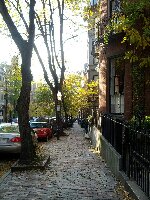
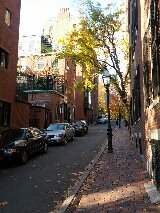
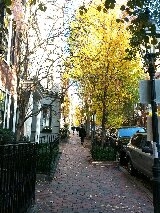
imageimageimageOn the west side of Beacon Hill is the prettiest and priciest residential area in Boston. The 18th and 19th century red brick houses line narrow cobblestone streets lit with gas lamps. Most of these buildings have been updated into beautiful homes and apartments.

imageWest from Beacon Hill and the Common is Back Bay, a predominantly residential area of 1800s buildings built on land reclaimed from mudflats on the Charles River. Beacon Hill is lower today because soil from the hill was moved down the hill to create fill this area.

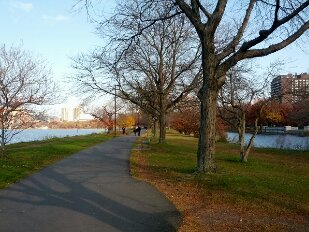
Along the riverfront a public park stretches from the Commonwealth Bridge to the Harvard athletic complex on the south side of the river. I wondered why the Charles River isn’t affected by the tide and discovered that the river is dammed to maintain the water level sufficiently high to protect the thousands of piles on which Back Bay buildings are built. A set of locks allows passage of pleasure boats to the Boston Harbour.

imageBack Bay is also home to the trendy Newbury Street where the lower levels of many of older houses have been converted to fashionable retail outlets. One block south of Newbury is the more established retail area along Boylston and Huntington streets.

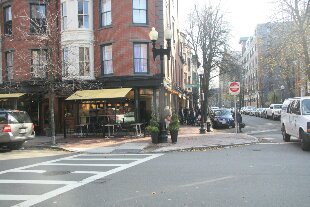
The centre of this area is Copely Square. At one end of the square is the historic Trinity Church (originally founded in 1733) building constructed in 1872.
image
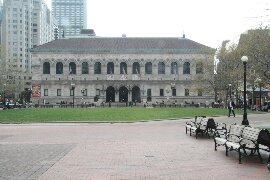
image At the other end of the square is the Boston Public Library established in 1854. This was the first publicly supported municipal library in the United States, the first large library open to the public in the United States, and the first public library to allow people to borrow books and other materials and take them home to read and use. The entrance to the library and some of original rooms include beautiful marble work and expansive murals and the main reading room with high vaulted windows and green-shade lamps is beautiful. Today this massive central library manages over 23.5 million books, periodicals, etc.

imageimageSaturday morning, we walked into an area known as the South End. In the 1980s, this was an area most Bostonians avoided because it was unsafe and remote, cut off from the city by the Massechusetts Turnpike. However, this was an area where many upper scale Bostonians lived in the 1800s – George Washington’s doctor lived on Union Street – and there are street after tree-lined street of red-brick, bow-front townhouses with ornate entrances and stoops.

imageSince the 1990s, as housing got more expensive in other areas of the City, the South End quickly gentrified and many of the buildings were renovated. Today it is a unique neighbourhood and It’s not hard to see why young, upscale families and the nouvea riche are drawn here. Many streets have beautiful median parks and there is a renewed cultural community and some of Boston’s best restaurants, design stores and boutiques. And all of this has happened without losing the historical character of the neighbourhood. The food and retail shops are scattered along Tremont, Shawmut and Washington streets. We had a great morning wandering up and down the side streets off Tremont and watching the upper middle class folks walk their dogs and kids – all with a Starbucks in hand – shop and visit the local eateries. On Saturday, some homeowners were busy decorating their homes for Christmas. Hard to believe on such a beautiful day, that Christmas is not far off.

Two other things that were interesting to me about Boston:

imageMounted outside the store at Tremont and Court is a large copper tea kettle with steam coming from the spout. This pot was the official trademark of the Oriental Tea Company, one of the first registered corporate marks in the US. On January 1st 1875, a contest was held to guess the capacity of the kettle, and Boston’s Sealer of Weights & Measures officially measured it. A total of 13,000 guesses were submitted, that were quickly organized and sorted. At the close of the contest, more than 10,000 spectators filled the square. Eight boys and a tall man had concealed themselves inside the kettle and appeared before measuring started, building excitement for the event. It took more than an hour to fill the pot to capacity; two hundred and twenty seven gallons, two quarts, one pint, and three gills. Eight people were declared winners and received one-eighth of a chest of tea, or about 5 pounds each. The name of the store hosting the pot today? Starbucks.

The second interesting thing is that it is home to the building designated as one of the worst designed in the US by the American Architectural Institute. It is an imposing hunk of concrete with slits windows and massive columns surrounded by acres of the most desolate brickyard you can imagine. Nothing pleasing or attractive about it. Completely devoid of vegetation. Some bad corporate citizen? No the building is Boston City Hall. Hard to beleive in a city with the history and beauty of Boston that such a thing could happen.

Boston is not New York by any means. It is smaller in size and population and even though the history of both cities date to the earliest years of America, Boston has much more of the feel of a City from which the spirit of independence was born. A beautiful place which reminded us more of Vancouver and well worth an extended visit. But wait until the Red Sox are playing at Fenway Park, then go to see the Green Monster.

Posted in Uncategorized | Leave a comment

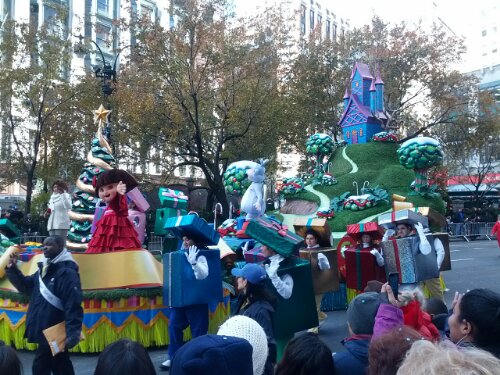
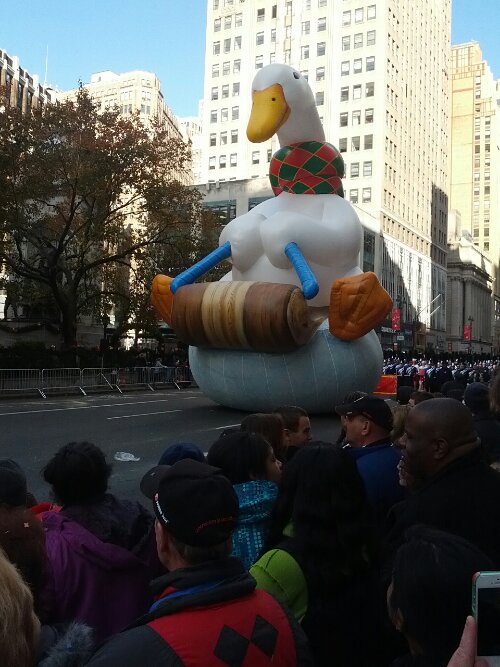
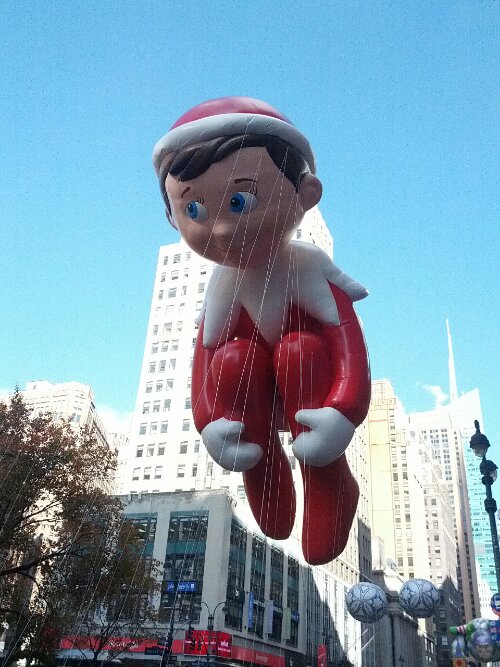
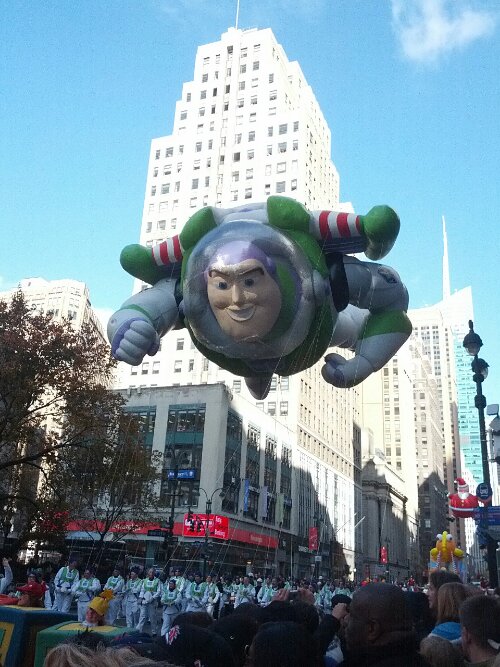
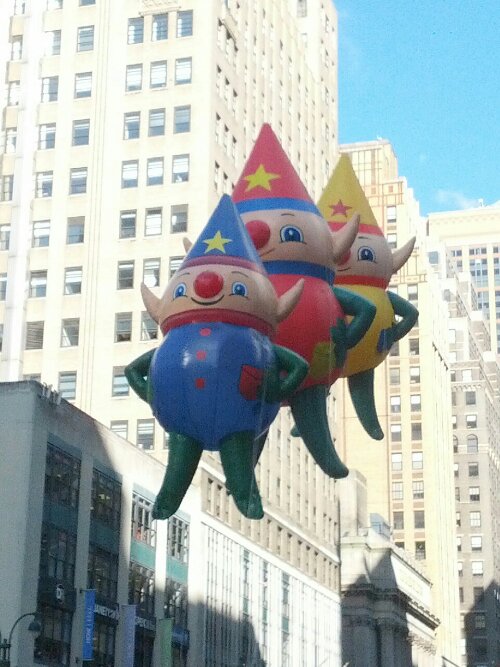
Thanksgiving Parade 2

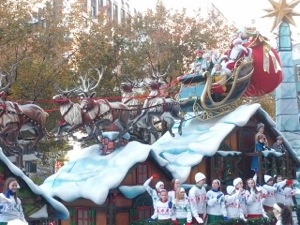
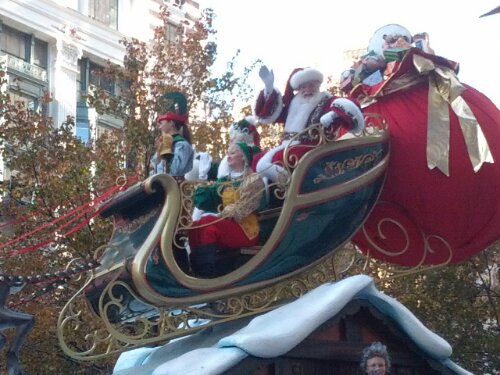
Get ready because Santa is coming!

image
image
image
image
image

Here he is!!!

image

image

No matter what, you have to . . .

image

Posted in Uncategorized | Leave a comment